
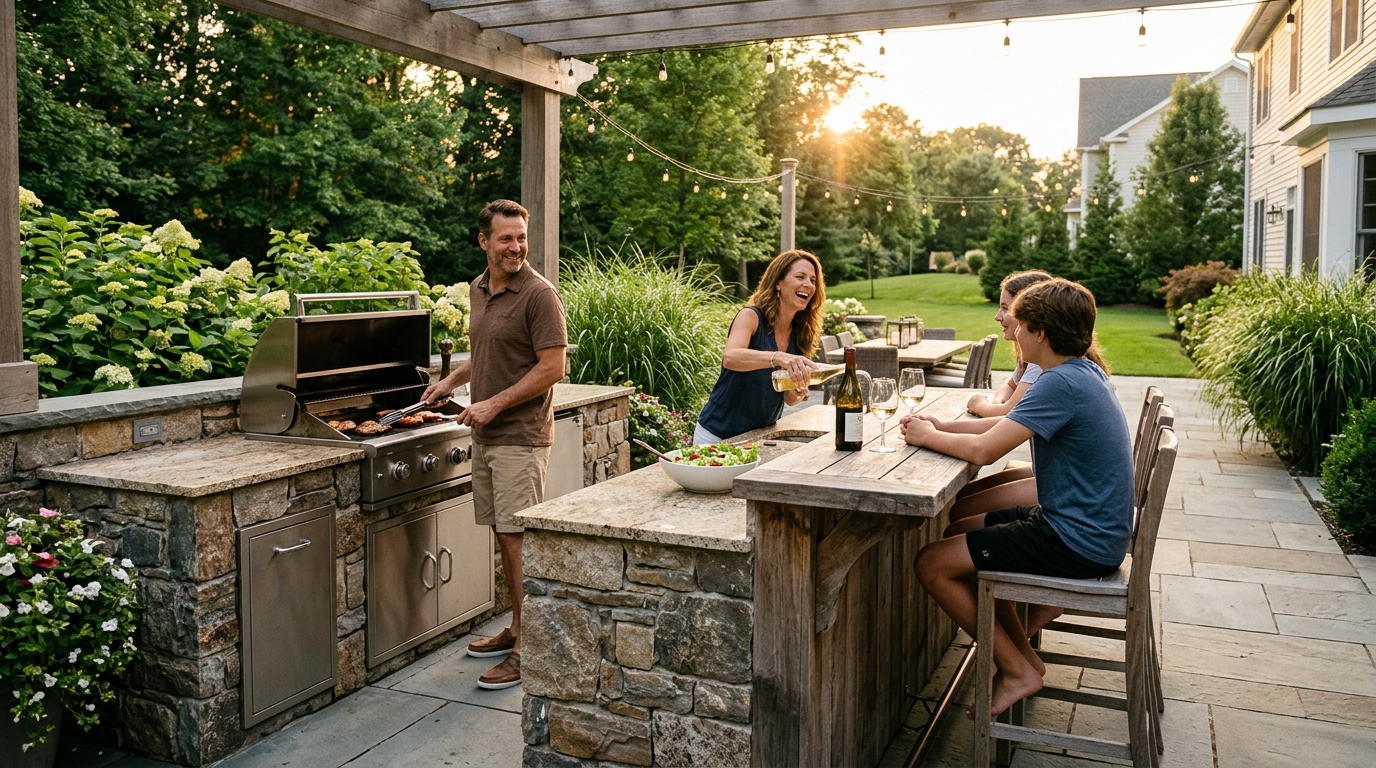
Designing an outdoor kitchen in New Jersey requires balancing local climate, zoning regulations, and lifestyle preferences. You must account for seasonal weather, proper drainage, and material durability to ensure your investment lasts. Magaletta Design Environments helps homeowners in Parsippany and surrounding areas navigate these complexities with expert planning. This guide outlines the critical factors you should evaluate before breaking ground.
Understanding New Jersey Climate and Material Durability
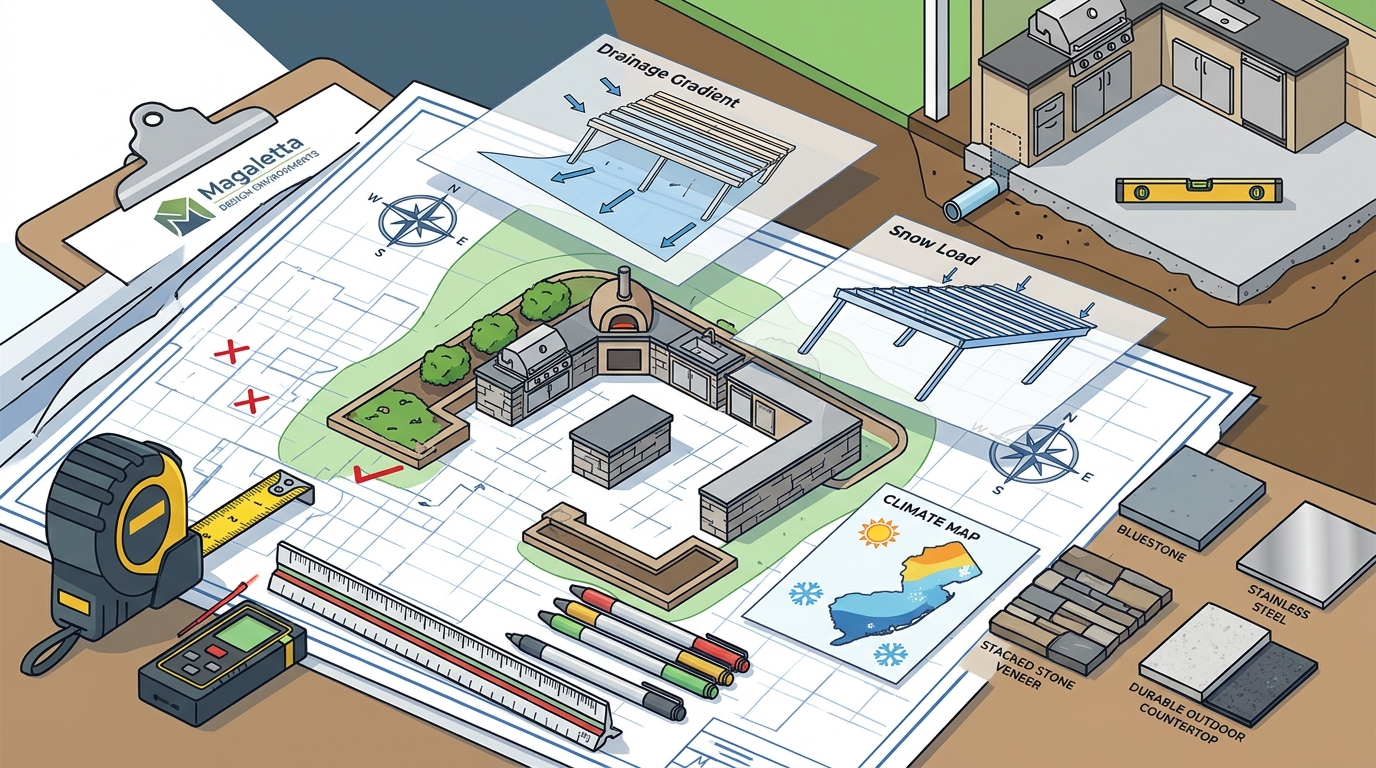
New Jersey experiences distinct seasonal changes that directly impact outdoor structures. Winter freeze-thaw cycles can crack concrete and damage unsealed stone. Outdoor kitchen design is the process of creating a functional cooking and dining area that withstands local weather conditions. You must select materials that resist moisture and temperature fluctuations. Stainless steel appliances and sealed natural stone are ideal choices for longevity. Proper drainage is essential to prevent water pooling around the structure. This prevents structural damage and ensures safety during wet seasons.
Zoning Regulations and Permit Requirements
Local municipalities in New Jersey have specific rules regarding outdoor structures. You must verify setback requirements and height restrictions before construction. Permit acquisition is the legal process of obtaining approval from local authorities to build on your property. Failing to secure the correct permits can lead to fines or forced demolition. Work with a professional who understands local codes to avoid these issues. They can handle the drafting and blueprinting required for approval. This ensures your project complies with all municipal standards.
Choosing the Right Appliances and Features
Your appliance selection should align with your cooking habits and entertaining style. Consider whether you need a full grill, a pizza oven, or a combination of both. Appliance integration is the strategic placement of cooking and refrigeration units within the kitchen layout. High-quality brands offer lifetime warranties and superior performance. You should also consider storage options for utensils and supplies. Custom cabinetry and countertops enhance both functionality and aesthetics. Ensure all appliances are rated for outdoor use to prevent corrosion.
Layout and Flow for Entertaining
The layout of your outdoor kitchen determines how easily you can move and serve guests. You should create distinct zones for cooking, dining, and lounging. Functional zoning is the arrangement of different activity areas to optimize workflow and comfort. A well-designed layout allows the host to cook while interacting with guests. Consider the sight lines from the kitchen to the main house and yard. This ensures the space feels connected to the rest of your property. Adequate spacing between appliances and seating areas is crucial for safety and comfort.
Lighting and Ambiance for Evening Use
Key Takeaways
- Select durable materials like stainless steel and sealed stone to withstand New Jersey weather.
- Verify local zoning regulations and obtain necessary permits before construction begins.
- Choose appliances that match your cooking style and are rated for outdoor use.
- Design a layout with distinct zones for cooking, dining, and lounging to improve flow.
- Incorporate layered lighting to enhance safety and create an inviting evening atmosphere.
- Ensure proper drainage to prevent water damage and maintain structural integrity.
Frequently Asked Questions
How much does an outdoor kitchen cost in New Jersey?
Costs vary widely based on size, materials, and appliance quality. A basic setup can start at a few thousand dollars, while luxury installations with custom masonry and high-end appliances can cost significantly more. Consulting with a professional designer provides an accurate estimate tailored to your vision.
Do I need a permit for an outdoor kitchen in NJ?
Yes, most municipalities require permits for outdoor structures. The specific requirements depend on your local zoning laws. A professional contractor can help you navigate the permit process and ensure compliance.
What materials are best for an outdoor kitchen in NJ?
Stainless steel, natural stone, and sealed concrete are excellent choices. These materials are durable and resistant to moisture and temperature changes. Avoid untreated wood or porous stones that can crack or rot in winter.
Can I use indoor appliances in an outdoor kitchen?
No, indoor appliances are not designed to withstand outdoor conditions. You must use appliances specifically rated for outdoor use. These units are built to resist corrosion and moisture.
How long does it take to build an outdoor kitchen?
Construction timelines vary based on complexity. A simple setup may take a few weeks, while a full custom installation can take several months. Factors like permitting and material availability can affect the schedule.
Should I hire a professional designer for my outdoor kitchen?
Hiring a professional ensures your design is functional, compliant with local codes, and aesthetically pleasing. They can handle everything from 3D modeling to construction and permit acquisition.
Start Your Outdoor Kitchen Project
Transform your backyard into a luxurious outdoor living space with expert design and construction. Magaletta Design Environments offers comprehensive services to bring your vision to life. From initial consultation to final installation, our team ensures every detail is perfect. to schedule a personalized landscape design consultation today.