
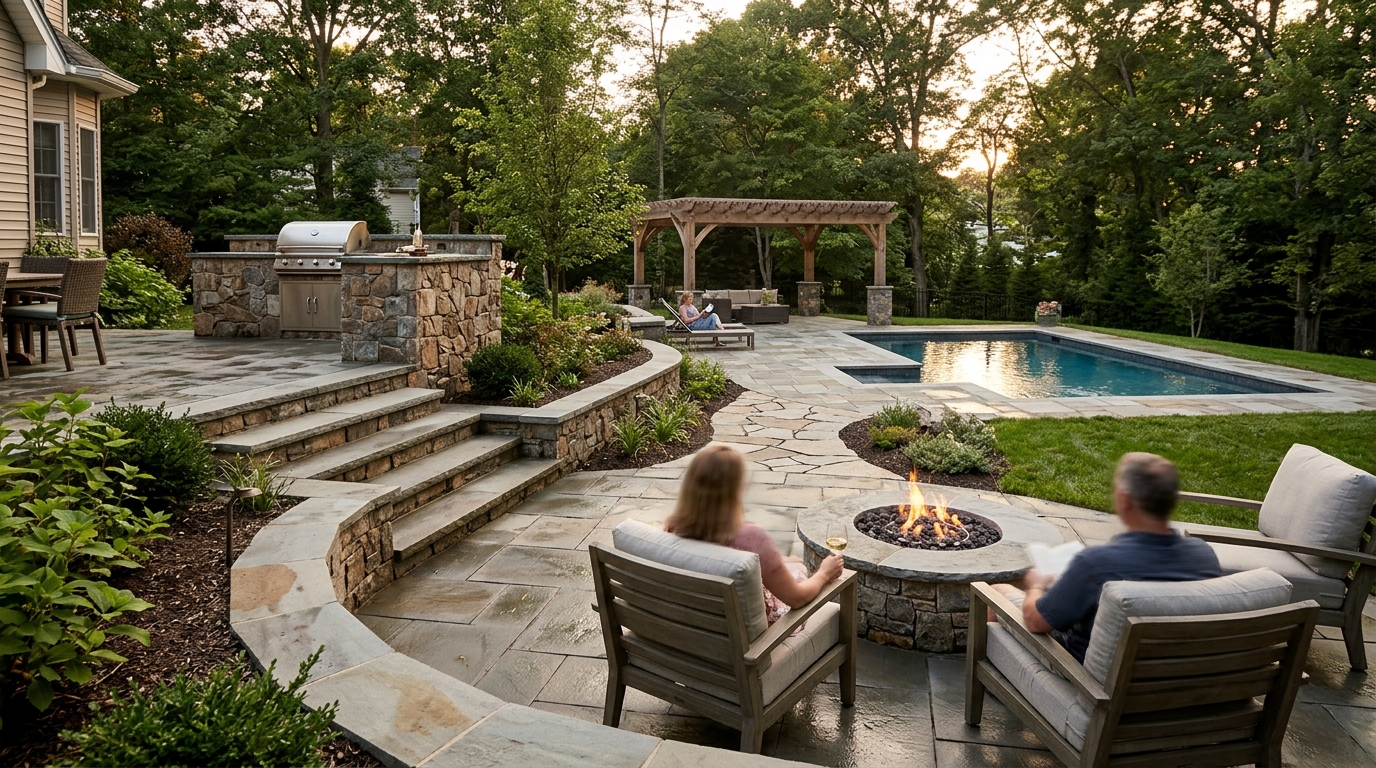
Transforming a standard yard into a functional outdoor living space requires more than just planting flowers. Hardscape elements provide the structural foundation that defines zones, improves usability, and increases property value. By integrating durable materials like stone, pavers, and concrete, you create a cohesive environment that withstands the elements while enhancing aesthetic appeal. This guide outlines the critical components to consider when planning a comprehensive redesign.
1. Custom Stone Patios
A custom stone patio serves as the primary gathering area for dining and socializing. This feature is the heart of most outdoor living spaces, providing a stable surface for furniture and appliances. When selecting materials, consider options like travertine or natural stone that complement your home's architecture. A well-designed patio connects indoor and outdoor living, making it the most visible element of your landscape.
2. Retaining Walls
Retaining walls manage slope changes and create usable flat areas on uneven terrain. Many properties in New Jersey feature sloped backyards that limit functional space. These structures not only prevent soil erosion but also add architectural interest and depth to the design. They can be built with natural stone or engineered materials to match the surrounding hardscape elements.
3. Paver Walkways and Driveways
4. Outdoor Kitchens and BBQ Islands
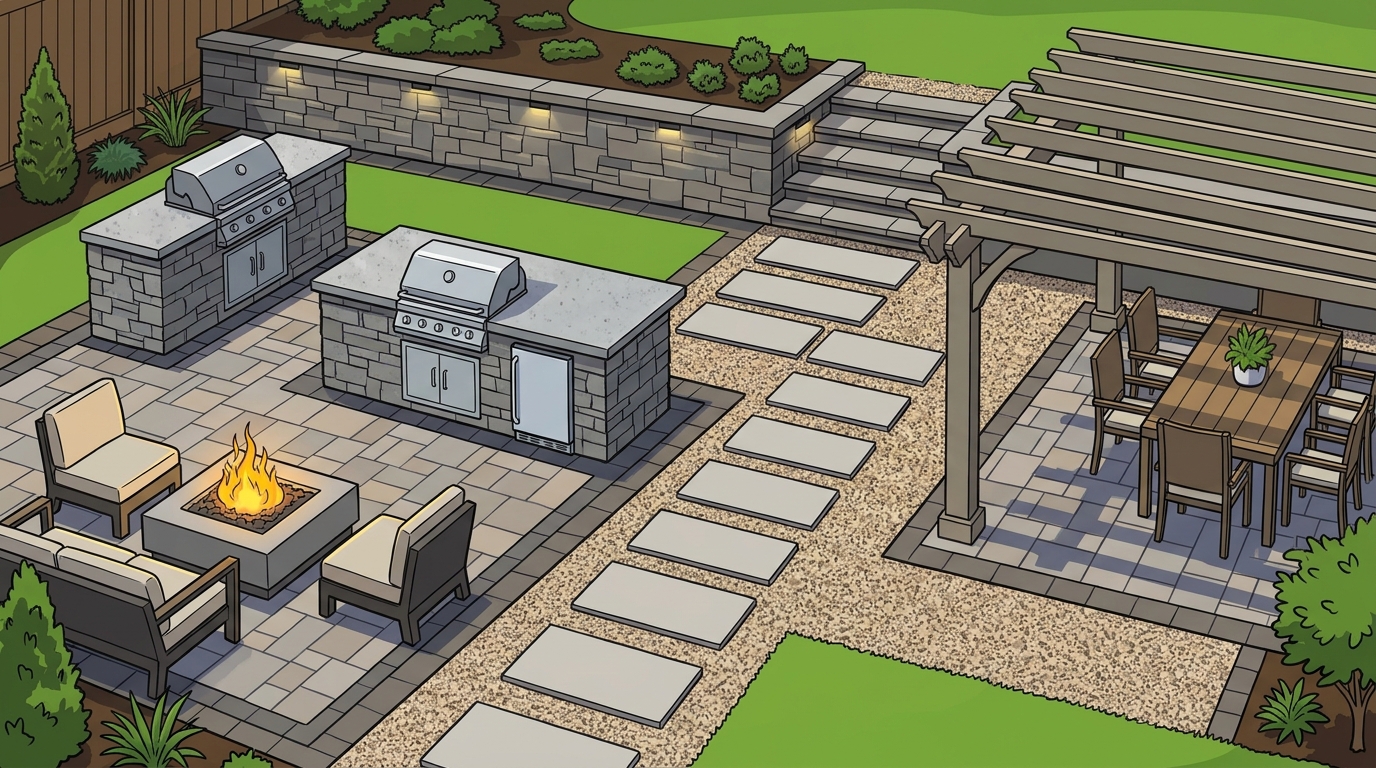
Outdoor kitchens extend your culinary space and elevate the entertaining experience. This feature is a significant investment that allows for year-round cooking in mild weather. A dedicated island can house grills, refrigerators, and storage cabinets, keeping the main indoor kitchen free for guests. Integrating this hardscape element requires careful planning for utilities and ventilation.
5. Fire Pits and Fireplaces
Fire features provide warmth and a focal point for evening gatherings. Whether built into a wall or standing alone, these elements encourage social interaction and extend the usability of your outdoor space into cooler months. The choice between a gas fireplace and a wood-burning pit depends on your maintenance preferences and local regulations. They add a cozy ambiance that softens the hard lines of surrounding structures.
6. Decks and Pergolas
Decks and pergolas offer elevated views and shaded relaxation areas. A deck can bridge the gap between your home and the ground-level patio, while a pergola provides partial shade and structural definition. These features are ideal for creating a distinct lounge area separate from the main dining space. They can be constructed from wood, composite, or vinyl materials to suit your aesthetic and maintenance needs.
7. Water Features
Water features add movement, sound, and a sense of tranquility to the landscape. From small fountains to large koi ponds, these elements serve as dynamic focal points that attract wildlife and reduce ambient noise. The sound of flowing water can mask traffic or neighborhood sounds, creating a private sanctuary. Proper installation requires careful consideration of plumbing and filtration systems to ensure longevity.
Choosing the Right Combination
Selecting the right hardscape features depends on your specific goals, budget, and property layout. Prioritize functionality first by identifying how you intend to use the space, then layer in aesthetic elements that complement your home. For a seamless design, ensure that materials and colors flow consistently across all features. Consulting with a professional designer can help you balance these elements effectively.
Frequently Asked Questions
What is the most important hardscape feature for a backyard?
The patio is generally considered the most important feature because it serves as the primary gathering space. It anchors the design and connects other elements like kitchens and fire pits.
How much does a complete hardscape redesign cost?
Can I install hardscape features myself?
Simple projects like small paver paths can be DIY projects, but complex structures like retaining walls and outdoor kitchens require professional installation. Professional installation ensures proper drainage, structural integrity, and code compliance.
What materials are best for hardscaping in New Jersey?
Natural stone, travertine, and high-quality pavers are popular choices due to their durability and aesthetic appeal. These materials withstand the local climate well and offer a range of colors and textures to match various design styles.
How long does a hardscape project take?
Start Your Redesign with Magaletta Design Environments
Ready to transform your outdoor space? Contact Magaletta Design Environments to schedule a consultation and explore how our expert team can bring your vision to life.